February 20th, 2026
Agency Growth Stagnation Caused by Expanding Services
Across the marketing industry, a quiet behavioural pattern has formed that rarely gets challenged at a structural level, especially when it comes to agency growth stagnation. When performance begins to slow, or when results stop compounding in the way they once did, the immediate response is rarely to step back and reassess the underlying foundations. Instead, the instinctive reaction becomes expansion, more services are introduced, more stacks are layered, and more capabilities are added on top of what already exists.
On the surface, this appears logical, if something is not working as well as it once did, improving the offering feels like forward progress. However, what is often happening beneath that decision is not proactive evolution, but reactive adjustment. The work structure has already begun to weaken, yet instead of addressing the root issue, additional layers are placed on top of it. Over time, this creates a pattern where activity increases, but stability does not, and this is one of the overlooked contributors to agency growth stagnation.
From a structural industry perspective, agencies are not adding services because they are strategically redesigning their growth model. They are adding services because performance pressure forces movement, when leads slow, when campaigns stop delivering the same impact, or when clients expect continued improvement, the natural response becomes “we have to do more.” Not necessarily better, not necessarily more aligned, just more.
The complication is that marketing was never designed to operate as isolated fragments, yet the modern environment has pushed many professionals into niche-specific roles, whether that is paid ads, social media, email marketing, or SEO. When performance dips within a narrow specialism, there is very little room to recalibrate structurally. The only visible direction becomes forward expansion into additional services, even if the original foundation was never fully stable to begin with, this then creates a start, stop, start, stop pattern that becomes normalised across the industry.
Work improves for a short period after a new service is introduced, results appear to stabilise, confidence returns. Then, months later, performance declines again, not because effort disappeared, but because the structural model was never addressed. At that point, another layer is added, another service is introduced, and the same cycle repeats, the system keeps moving, but it does not compound.
If an engine begins to fail, the correct response is to examine the engine itself, not attach new parts in the hope it will run smoothly for a little longer. Yet structurally, this is exactly what many agencies have been conditioned to do. Instead of diagnosing the operational foundation, they expand the service stack, temporarily masking the instability rather than resolving it.
Over time, this behaviour does not create resilience, it creates operational complexity, fragmented focus, and diluted positioning. The agency appears to be evolving outward, but internally it becomes harder to control delivery, messaging, and performance consistency. What looks like growth on the surface can, in reality, be a slow drift toward agency growth stagnation, where more activity exists, but less structural clarity supports it.
The industry rarely frames this as a structural issue, it is often described as market change, platform shifts, or client expectations evolving. While those factors do exist, the recurring pattern suggests something deeper, agencies are not necessarily lacking effort or capability, they are operating on layered structures that were never fully stabilised before expansion began.
And when expansion is built on unstable foundations, progress becomes temporary rather than compounding, which is where agency growth stagnation quietly begins to take hold without being immediately recognised.

Why Reactive Expansion Accelerates Agency Growth Stagnation
One of the most misunderstood aspects of agency growth stagnation is the assumption that it is caused by poor decision-making, lack of skill, or inconsistency in effort. In reality, for many niche marketing professionals, the behaviour is far more rational than it appears from the outside, many are their own bosses. They have bills to pay, families to support, and a pipeline that directly dictates their financial stability. When performance slows, the pressure is not theoretical, it is immediate and commercial, under those conditions, structural reflection becomes a luxury rather than a realistic option.
Stripping everything back, reassessing foundations, and rebuilding a stable growth structure requires time, and time in a self-employed environment is directly tied to income. As a result, when results begin to fluctuate or slow down, the natural response is not to pause and diagnose the underlying system, but to keep moving. The most accessible way to keep momentum is to build on top of the existing stack, introduce something new, and hope performance stabilises quickly enough to protect cash flow, this behaviour does not come from carelessness, it comes from survival logic.
However, this is where agency growth stagnation quietly accelerates rather than resolves, instead of taking three steps forward and two steps back to correct structure, many professionals are forced into the opposite pattern, three steps back and two forward. Activity increases, services evolve, and delivery continues, but the foundational structure that supports long-term growth is never fully revisited.
Over time, this does not always make operations harder to control in an obvious sense, what often happens instead is layer replacement. A service that once worked is gradually let go, a new one is introduced, and the business keeps adapting at the surface level. From the outside, this looks like evolution, structurally, it resembles stacking bricks higher while the original foundations remain unchanged. As the structure grows, the weight increases, and the strain shifts downward rather than being resolved at the base.
Eventually, the foundations begin to weaken, not because the professional lacks capability, but because the underlying growth structure was never rebuilt to support the added layers.
It is also important to recognise that this pattern is not solely the responsibility of individual agencies, the digital marketing industry itself has played a significant role in shaping this behaviour. In earlier models of marketing, professionals operated as all-rounders who assessed and developed a business as a whole, not as isolated fragments. The objective was not to complete disconnected tasks, but to establish a cohesive digital foundation that could support long-term growth.
As competition increased, industry messaging gradually shifted, specialists were encouraged to focus on one niche service, build that first, and expand later. While this advice appeared strategically sound, it unintentionally disconnected marketing execution from business foundations. A business, regardless of sector, is built from the ground up, yet many modern service models evolved from fragmented specialisms rather than integrated structural thinking.
This industry conditioning reinforced a cycle where adding, swapping, and stacking services became normalised behaviour, professionals were not taught to return to foundations, they were taught to refine, replace, and expand.
Over time, this creates an environment where agency growth stagnation is not a sudden event, but a gradual structural drift. The business continues operating, clients continue coming in waves, and services continue evolving, yet the underlying growth model becomes increasingly layered rather than stabilised. The result is not immediate failure, but a quiet plateau where effort increases, complexity increases, and consistent compounding growth becomes harder to sustain.
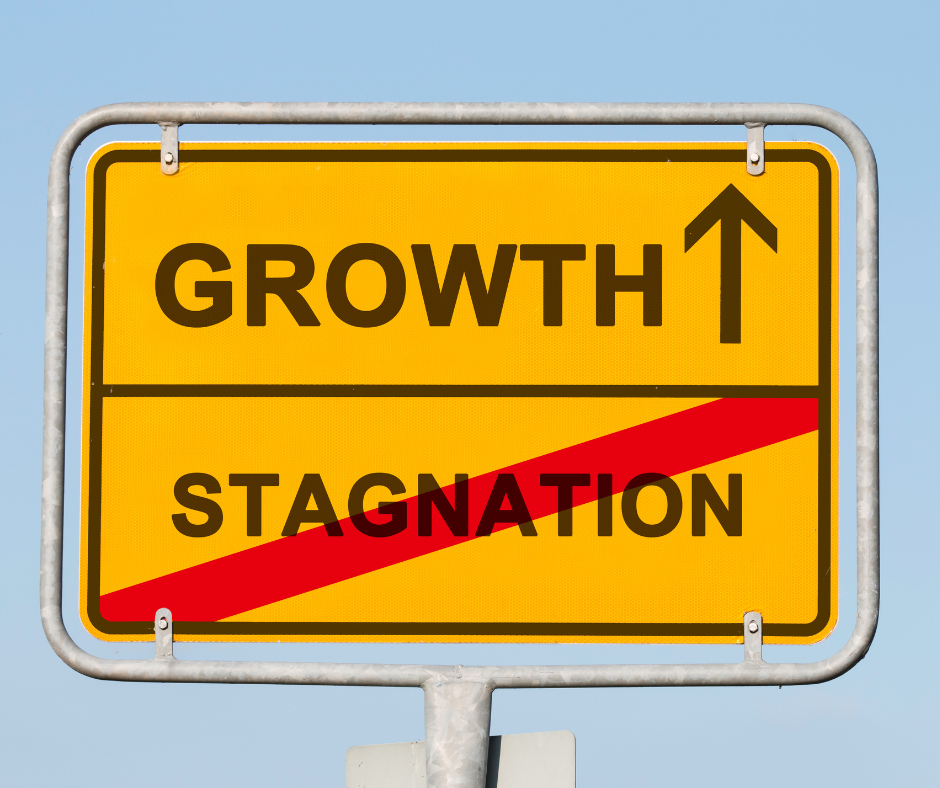
Why Specialisation Without Foundations Reinforces Agency Growth Stagnation
It is important to state clearly that this perspective sits within structural observation rather than historical certainty, there is no time machine that allows a direct comparison across eras of marketing practice. However, when viewed through an industry lens, a noticeable shift becomes apparent between earlier marketing models and the modern digital environment.
Before the rise of digital marketing specialisation, professionals did not operate as isolated service providers focused on one narrow function. Marketing was approached in relation to the whole business, when businesses were established, the role of marketing was not segmented into individual tasks or channels, but aligned with overall commercial direction, positioning, and long-term growth stability, the objective was cohesion rather than fragmentation.
As digital marketing expanded and competition increased, the industry naturally evolved, more professionals entered the space, more services emerged, and differentiation became more difficult. In response, niche positioning began to appear as a logical advantage. By specialising in one area, whether paid ads, social media, SEO, or email marketing, professionals believed they could stand out more easily and secure work more consistently. In the early stages of this shift, this approach likely worked well for many, over time, however, saturation followed.
As more specialists entered each niche, competition intensified within narrow service categories. Differentiation gradually moved away from foundational business understanding and toward service-based positioning. Instead of addressing the structural needs of a business as a whole, marketing became increasingly segmented into isolated deliverables. Each service functioned as a part, rather than as an integrated growth system, this structural fragmentation has quietly contributed to agency growth stagnation across the industry.
When a professional is positioned around a single niche service, their commercial survival often depends on the continued performance of that one channel or discipline. If results slow or platforms evolve, the pressure to expand into adjacent services increases. Yet this expansion is rarely rooted in rebuilding foundations. Instead, it becomes another layer added to maintain competitiveness within an increasingly crowded market.
From observed pains data and industry behaviour, the direction of marketing now appears to be shifting again. Not backward in a nostalgic sense, but structurally toward integration. Businesses do not experience growth in isolated segments. Their visibility, demand, conversion, and performance exist as interconnected elements of the same commercial system. Treating them as separate functions may create short-term operational clarity, but it often weakens long-term structural stability.
As competition within niches continues to intensify, specialists who remain confined to fragmented service models risk being left behind, not because they lack skill, but because the market increasingly requires cohesive, system-level thinking. The data observed suggests that many structural issues faced by agencies do not originate from execution failure, but from disconnection between marketing activity and the business foundations it is meant to support, this is where frameworks begin to re-emerge as a natural industry progression.
Rather than dealing with isolated segments of a business, the structural direction of marketing is moving toward integrated oversight, where the whole business is assessed, stabilised, and grown through interconnected systems. In this context, the role of the marketer shifts from task executor to structural operator. Not managing one channel in isolation, but aligning visibility, demand, conversion, and performance as part of a unified growth structure.
Without this return to foundational alignment, agency growth stagnation becomes increasingly likely, especially in environments where competition is high, services are fragmented, and structural rebuilding is consistently postponed.

Conclusion:- The Structural Reality Behind Agency Growth Stagnation and Where the Industry Is Heading
When all of these patterns are viewed together, a consistent structural picture begins to form across the marketing industry. Agencies are not stagnating because they are inactive, unskilled, or unwilling to adapt. In many cases, the opposite is true., they are highly active, constantly evolving, and repeatedly adjusting their services, positioning, and delivery in response to market pressure. Yet despite this movement, agency growth stagnation continues to appear as a recurring outcome rather than a temporary phase, the core issue is not effort. It is structure.
Over time, the industry has normalised forward motion without structural return. When performance slows, services are added, when results fluctuate, offers are refreshed. When competition increases, positioning shifts. Each action appears logical in isolation, especially for self-employed marketing professionals who must protect pipeline, income, and commercial stability. They do not have the luxury of pausing for extended structural reassessment when there are real financial responsibilities attached to their business.
New services create temporary lifts, fresh messaging creates renewed engagement, adaptation creates short-term momentum. But if the original foundations were never fully stabilised, these layers do not resolve the underlying growth limitations. Instead, they mask them for a period of time before the same start–stop patterns return, this is where agency growth stagnation quietly embeds itself, not as a sudden failure, but as a gradual structural drift.
Industry conditioning has also played a significant role in reinforcing this cycle, as competition increased within digital marketing, professionals were encouraged to specialise in narrow niches to differentiate themselves. Initially, this likely created commercial advantages. However, as more specialists entered the same spaces, differentiation shifted toward service expansion rather than foundational rebuilding. Marketing, which was historically aligned with the whole business, became increasingly fragmented into isolated functions.
This fragmentation did not just affect agencies internally, it filtered into prospect behaviour, expectations, and decision-making. As agencies evolved their services and positioning without correcting structural foundations, prospects experienced inconsistency in offers, messaging, and long-term results. Over time, this reinforced instability on both sides of the buyer–provider relationship, further contributing to agency growth stagnation as a structural industry pattern rather than an isolated operational issue.
From a structural observation standpoint, the direction of the industry now appears to be moving toward reintegration rather than further fragmentation.
Businesses do not grow in segments, they grow as interconnected systems where visibility, demand, conversion, and performance influence one another continuously. Treating marketing as a collection of isolated services may sustain short-term activity, but it rarely produces stable, compounding growth over longer periods. The data patterns, industry behaviours, and competitive saturation all point toward the same underlying shift: a gradual return to holistic, system-level marketing thinking.
This does not mean abandoning adaptation or evolution. It means grounding that evolution in corrected foundations rather than layered expansion.
Where the industry is heading is not toward more services for the sake of differentiation, but toward more structured, integrated approaches that address the business as a whole rather than as disconnected marketing tasks. As competition continues to intensify and fragmented service models reach saturation, the professionals who stabilise foundations, rebuild systems, and operate with structural oversight will become increasingly aligned with how modern businesses actually grow.
In that environment, the role of the marketer evolves beyond delivering individual services. It shifts toward managing the full growth structure of a business in a controlled, repeatable way. Not reacting with constant stacking, but operating through systems that create prospects, nurture demand, and support scalable growth stability.
Institutional research is also highlighting the transition toward AI-first operating models built around integrated human oversight and structured systems, indicating that future marketing execution will be governed more by operational frameworks than isolated channel specialisation.
And as this shift continues, agency growth stagnation will not be solved by doing more, adding more, or stacking more. It will be reduced by returning to foundations, integrating fragmented functions, and operating in line with where the industry is structurally moving, back toward whole-business marketing supported by frameworks, systems, and controlled growth models rather than isolated service execution.
Watch the Framework Walkthrough
A guided walkthrough for marketing professionals evaluating structured growth.
Already understand the framework?
Take the diagnostic to understand how your current foundations align with the AI–Human Agency Growth Framework™